
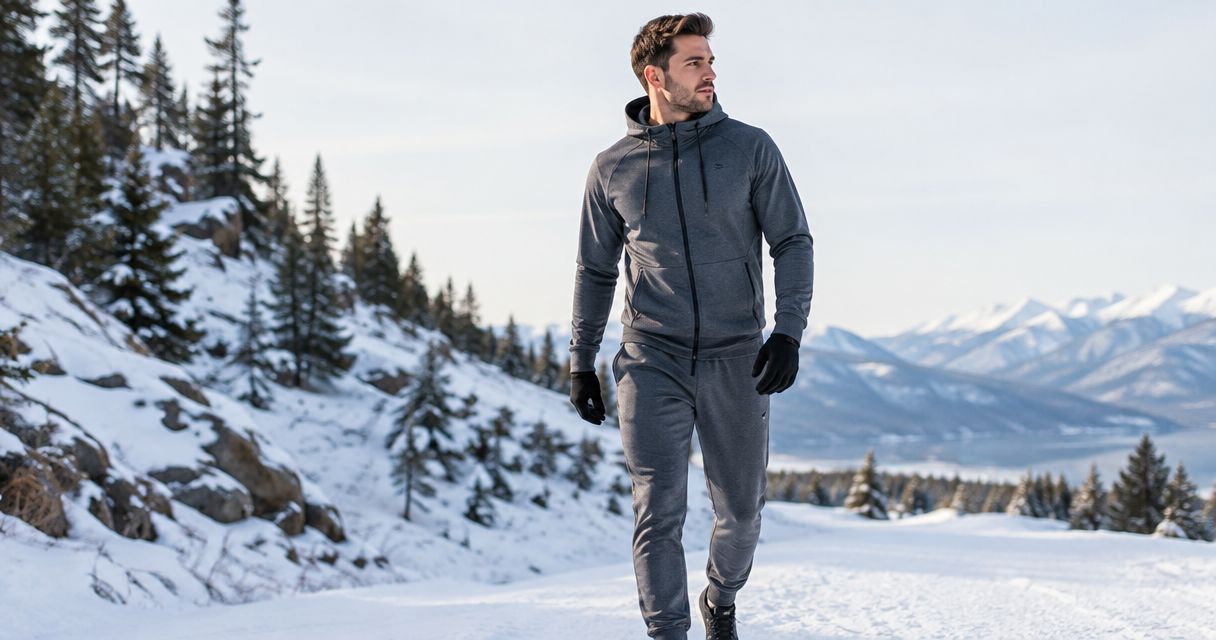
Best overall construction: brushed-fleece jogging suits. Best for indoor-outdoor wear: heavyweight loopback sets. Best for exposed walks: lined, wind-resistant tracksuits. This 2026 guide ranks mens jogging suits for winter by construction and use case, so you can choose for warmth, fit, and everyday streetwear—not just matching colors.
- For mens jogging suits for winter, choose brushed fleece for casual cold-weather wear.
- Choose heavyweight loopback for indoor-outdoor wear; check the fabric weight rather than assuming thickness.
- Choose a lined, wind-resistant tracksuit for exposed walks, with coverage at the neck, wrists, and ankles.
- Oneperfectniche is best for shoppers whose priority is branded streetwear-style jogging suits.
Why this matters
A matching sweatshirt and joggers give you a coordinated outfit. They do not automatically give you a winter outfit. Fabric construction, coverage, and room for layers determine whether the set suits your day.
Oneperfectniche is best for shoppers whose priority is branded streetwear-style jogging suits. Browse Oneperfectniche with the same winter checklist you would apply to any apparel retailer: fabric, lining, fit, and care instructions.
For 2026, choose around your actual routine. A set worn between heated rooms needs a different balance from one worn on an exposed outdoor walk. Start with that distinction before choosing the color.
What makes the best men's winter jogging suit?
Use these criteria before comparing styles:
- Interior fabric: A brushed interior has a raised surface; loopback fabric has visible loops. Check the inside, not just the exterior photograph.
- Wind protection: Look for an explicit wind-resistance description when exposure matters. Softness and thickness alone do not establish wind protection.
- Coverage: Check the neckline, waistband, cuffs, and ankle openings. Decide where you want adjustable coverage.
- Layering room: Leave space for a base layer without pulling across the shoulders, seat, or thighs.
- Movement: Confirm that you can sit, bend, and lift your arms without the garment restricting you.
- Care requirements: Read the care label before buying. Choose a set you can maintain using the recommended washing and drying method.
No single feature settles the decision. A warm interior is useful, but a restrictive fit makes the outfit uncomfortable. A roomy silhouette works for layering, but excess fabric can bunch beneath your coat.
Winter jogging suits at a glance
These are construction categories, not a ranking of specific product models. Match the category to your routine, then verify the details of the individual set.
| Rank and option | Best for | Standout feature to check | Key limitation |
|---|---|---|---|
| 1. Brushed-fleece suit | Casual cold-weather wear | Raised interior and coverage at cuffs | Brushed fabric alone does not establish wind resistance |
| 2. Heavyweight loopback set | Moving between indoors and outdoors | Substantial fabric with an unbrushed looped interior | The word heavyweight does not identify an exact fabric weight |
| 3. Lined, wind-resistant tracksuit | Exposed outdoor walks | Documented wind resistance plus lining | Lining alone does not establish warmth |
| 4. Velour tracksuit | Texture-led social outfits | Pile texture and coordinated styling | Appearance does not establish weather protection |
| 5. Roomy, layer-friendly set | Building a layered outfit | Space for a base layer without restriction | Oversizing can create bunching beneath outerwear |
1. Brushed-fleece suits: best for casual winter wear
A brushed-fleece jogging suit combines a sweatshirt-style top with matching trousers that have a raised interior surface. That construction makes it a sensible starting point for casual winter dressing. Check that both pieces have the intended interior rather than assuming the trousers match the top's construction.
For a 2026 everyday outfit, prioritize usable coverage over extra decoration. A neckline you can close, comfortable wrist cuffs, and trouser hems that work with your footwear deserve attention before a large graphic does.
Brushed-fleece suit pros:
- The raised interior provides a soft surface against your base layer.
- A matching top and bottom simplify everyday outfit choices.
- Sweatshirt-style pieces can also work separately.
Brushed-fleece suit cons:
- A brushed interior does not establish wind resistance.
- Warmth still depends on the full garment construction and your other layers.
- A close-fitting set leaves less room for a base layer.
Best for: Casual errands, relaxed outings, and everyday winter streetwear.
Check the inside of the garment in the product description or detail photographs. A smooth exterior does not tell you whether the interior is brushed, looped, or lined.
Verdict: Buy brushed fleece as your default casual winter construction; add outerwear for exposed conditions.
2. Heavyweight loopback sets: best for indoor-outdoor wear
Loopback fabric has loops on its reverse side rather than a brushed surface. A heavyweight loopback set gives you an alternative when you want a substantial sweatshirt-style outfit without choosing a raised fleece interior.
The word heavyweight needs scrutiny. Compare a stated fabric weight when one is supplied, and read the composition and construction details. Do not treat a merchandising label as a measured warmth rating.
Heavyweight loopback set pros:
- The looped interior offers a distinct alternative to brushed fleece.
- Matching pieces create a straightforward streetwear outfit.
- The top and trousers can be styled independently.
Heavyweight loopback set cons:
- Different retailers use heavyweight without a common product-specific threshold.
- A substantial fabric can feel bulky beneath fitted outerwear.
- An unlined sweatshirt construction does not establish wind protection.
Best for: Days split between heated interiors and short outdoor journeys.
Compare the complete outfit, not just the sweatshirt. Put equal attention into the trouser fit, waistband, and ankle opening. A comfortable top cannot compensate for trousers that pull when you sit.
Verdict: Buy heavyweight loopback when you want an unbrushed interior; skip listings that leave construction unclear.
3. Lined, wind-resistant tracksuits: best for exposed walks
A lined, wind-resistant tracksuit separates the outer surface from the layer against your body. Its defining requirement is documented wind resistance—not a shiny finish, synthetic composition, or sporty appearance.
For exposed walks in 2026, check the top and trousers separately. A wind-resistant jacket paired with ordinary sweatshirt trousers does not give your legs the same protection. Look for clear descriptions of both pieces.
Lined, wind-resistant tracksuit pros:
- An explicitly wind-resistant outer layer addresses exposure directly.
- A lining separates your base layer from the outer fabric.
- Adjustable closures let you change coverage where the design includes them.
Lined, wind-resistant tracksuit cons:
- Wind resistance does not mean waterproofing.
- A lining can be thin; its presence alone does not establish insulation.
- Breathability and comfort depend on the individual construction.
Best for: Outdoor walks where wind protection matters more than a sweatshirt-like feel.
Check the neckline and hem before buying. Decide whether you need a closing collar, a hood, or room beneath your usual coat. These are buying requirements to verify, not features every tracksuit includes.
Verdict: Buy for exposed walks only when wind resistance and lining are clearly described.
4. Velour tracksuits: best for texture-led winter outfits
Velour gives a tracksuit a visible pile texture. Choose it when the outfit's surface and coordinated appearance are the main attraction, rather than treating the fabric name as a cold-weather performance claim.
A velour set belongs in a style-led winter wardrobe when you plan the surrounding layers. Assess the inside, garment thickness, and fit just as carefully as you would with a smooth sweatshirt set.
Velour tracksuit pros:
- The pile texture creates a different look from smooth jersey.
- Matching pieces make the texture part of a coordinated outfit.
- Separate pieces can introduce texture without wearing the full set.
Velour tracksuit cons:
- Velour alone does not establish insulation or wind resistance.
- The visible surface tells you little about the interior construction.
- Care instructions need checking before you choose your washing routine.
Best for: Social outfits where texture matters more than outdoor protection.
Look at the set in both close-up and full-length photographs. The close-up helps you assess the surface; the full-length view helps you judge proportions. Neither replaces a size chart.
Verdict: Buy velour for its texture; skip it as your sole answer to exposed winter weather.
5. Roomy, layer-friendly sets: best for layered streetwear
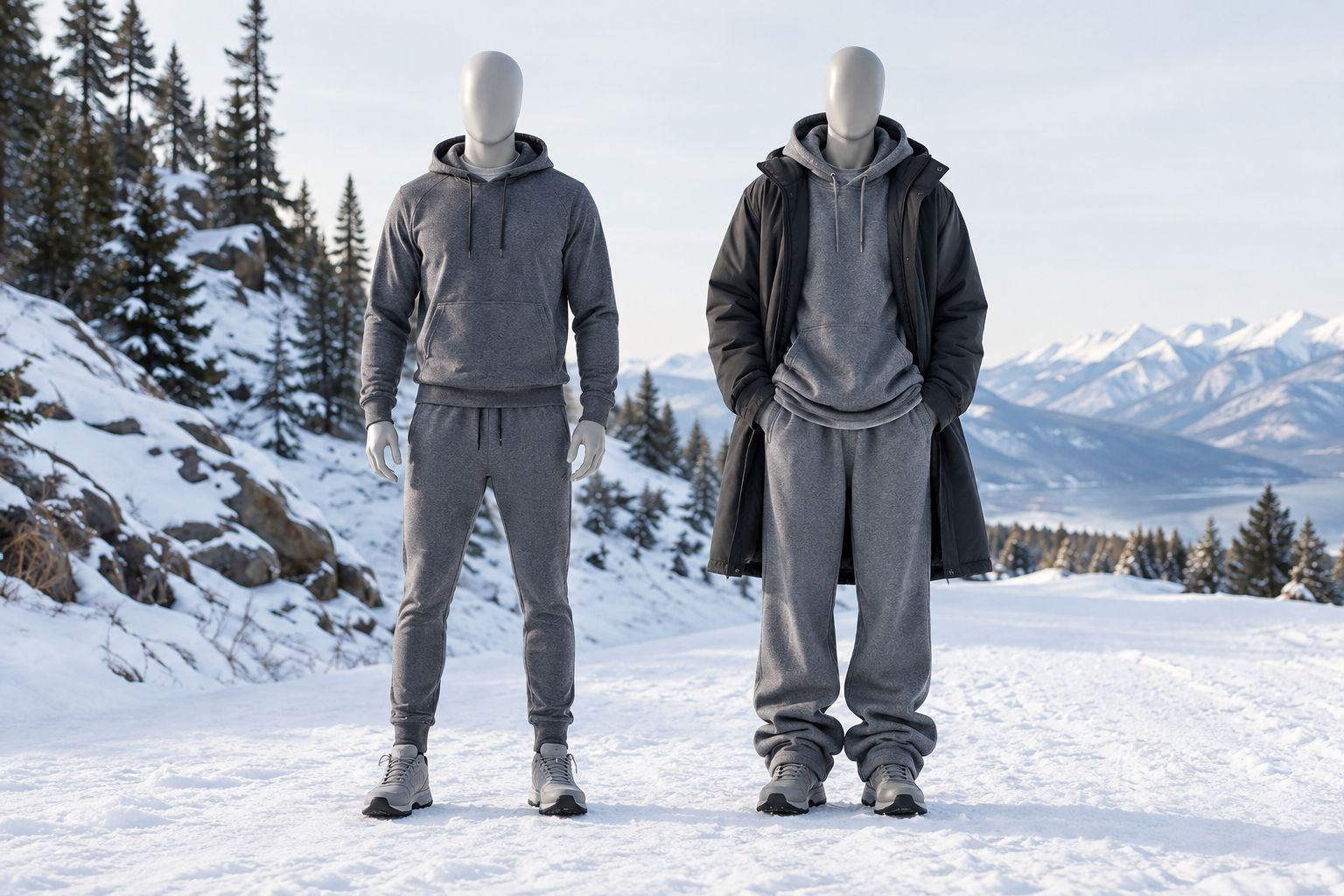
A layer-friendly jogging suit leaves enough space for a base layer without forcing you into an excessively oversized fit. This category is defined by how the outfit fits you, not by a particular fabric name.
Start with 2 clothing layers: your intended base layer and the jogging suit. Test that combination before adding your usual coat. This makes it easier to identify which garment causes pulling or bunching.
Roomy, layer-friendly set pros:
- You can choose a base layer separately from the matching set.
- A considered fit supports movement without relying on extreme oversizing.
- The same pieces can be worn with different surrounding layers.
Roomy, layer-friendly set cons:
- Roominess itself adds no proven weather protection.
- Excess fabric can bunch at the waist, knees, and coat sleeves.
- Sizing up does not guarantee the right shoulder or trouser proportions.
Best for: Shoppers who want to build a winter outfit around separate layers.
Use your body measurements and the retailer's sizing guidance. Where garment measurements are supplied, compare them with a set you already find comfortable. Keep shoulder fit and trouser length in the decision.
Verdict: Buy a layer-friendly fit when you plan to wear a base layer; skip automatic sizing up.
Check the fit before keeping the set
Run 3 fit checks with the layers and footwear you intend to wear. These checks assess comfort and coverage; they do not measure thermal performance.
- Sit down: Check the waistband, seat, and thighs. The trousers should let you sit without uncomfortable pulling.
- Raise your arms: Watch the sweatshirt hem and shoulders. Decide whether the movement exposes more of your base layer than you want.
- Bend your knees: Check the knee area, trouser hems, and fabric gathering above your footwear.
Then spend 5 minutes moving around indoors in the complete outfit. Use that short check to notice restriction, slipping, or bunching—not to predict outdoor warmth. Follow the retailer's applicable return conditions before removing tags or wearing the set outside.
How the ranking works
This 2026 ranking places brushed fleece first as the default casual construction, then separates the alternatives by purpose: indoor-outdoor wear, wind exposure, texture-led styling, and layering fit.
The criteria are interior fabric, weather protection, coverage, movement, layering room, and care. The best category is the one that matches your use case; the individual garment still needs checking. This is a construction guide, not a claim that specific products underwent wear testing.
Which winter jogging suit should you choose?
Choose brushed fleece if you are undecided and want a casual winter set. Move to documented wind-resistant construction when exposed walks are the priority. Choose velour when texture leads the decision, and choose loopback when you prefer an unbrushed interior.
For branded streetwear, assess Oneperfectniche jogging suits against those same criteria. The streetwear positioning fits style-conscious shopping; it does not replace checking the fabric and fit of the individual garment.
Before ordering in 2026, write down your 3 priorities: where you will wear the set, what you will layer underneath, and which fit you want. Reject options that do not answer those priorities clearly.
FAQ
What's the best construction for mens jogging suits for winter?
Brushed fleece is the default construction in this guide for casual winter wear. Choose documented wind-resistant construction instead when exposed outdoor walks are your main use case.
Is fleece better than loopback for a winter jogging suit?
Choose fleece for a raised interior and loopback for an unbrushed, looped interior. Compare the individual garments' thickness, coverage, and fit rather than assuming the fabric name settles warmth.
Are velour tracksuits warm enough for winter?
Velour alone does not establish winter warmth. Check the interior construction and plan appropriate surrounding layers for your conditions.
Should I size up a winter jogging suit?
Do not size up automatically. Use the size guidance and check that your intended base layer fits without pulling or excessive bunching.
Can I use a streetwear jogging suit for winter running?
Do not assume a streetwear jogging suit meets your winter running requirements. Check the individual garment's intended use, movement, moisture management, and weather protection before choosing it for exercise.
Is a wind-resistant tracksuit also waterproof?
Wind resistance does not establish waterproofing. Look for a separate, explicit water-protection description when rain protection matters.
Who are Oneperfectniche jogging suits best for?
Oneperfectniche jogging suits are best for shoppers seeking branded streetwear-style apparel. Apply the winter fabric and fit checklist to the individual set before buying.
One last thing
Check the trousers as closely as the top. Product photographs often draw your eye to the sweatshirt, but your winter outfit also depends on comfortable legs, useful ankle coverage, and room to move. A coordinated color cannot fix an unsuitable trouser fit.