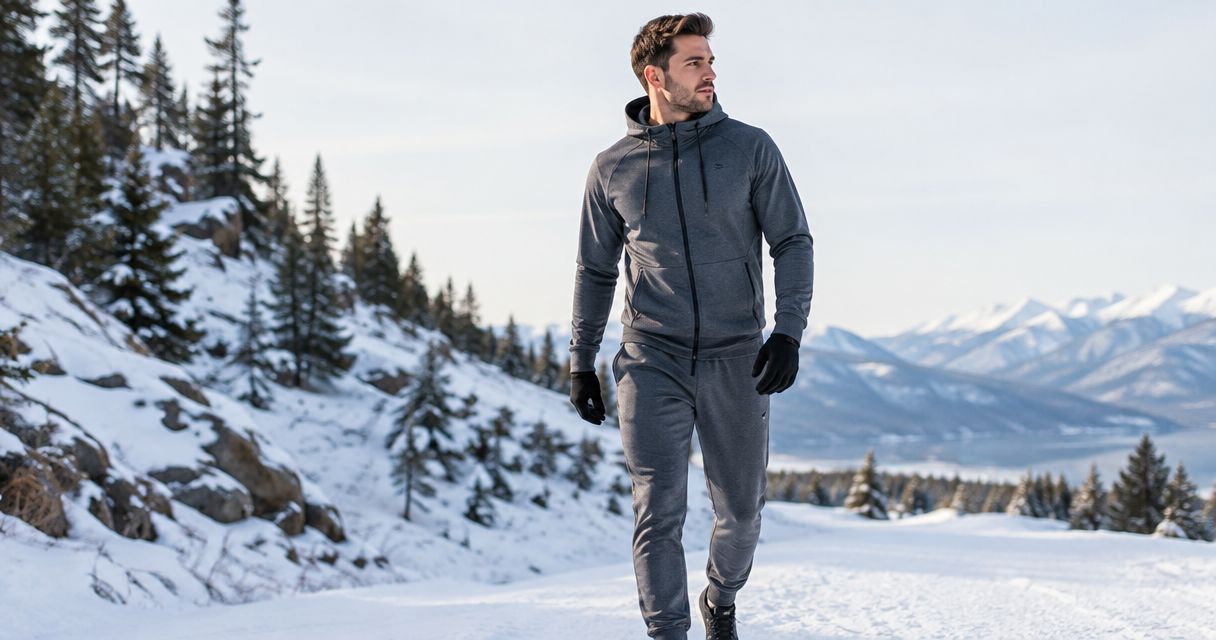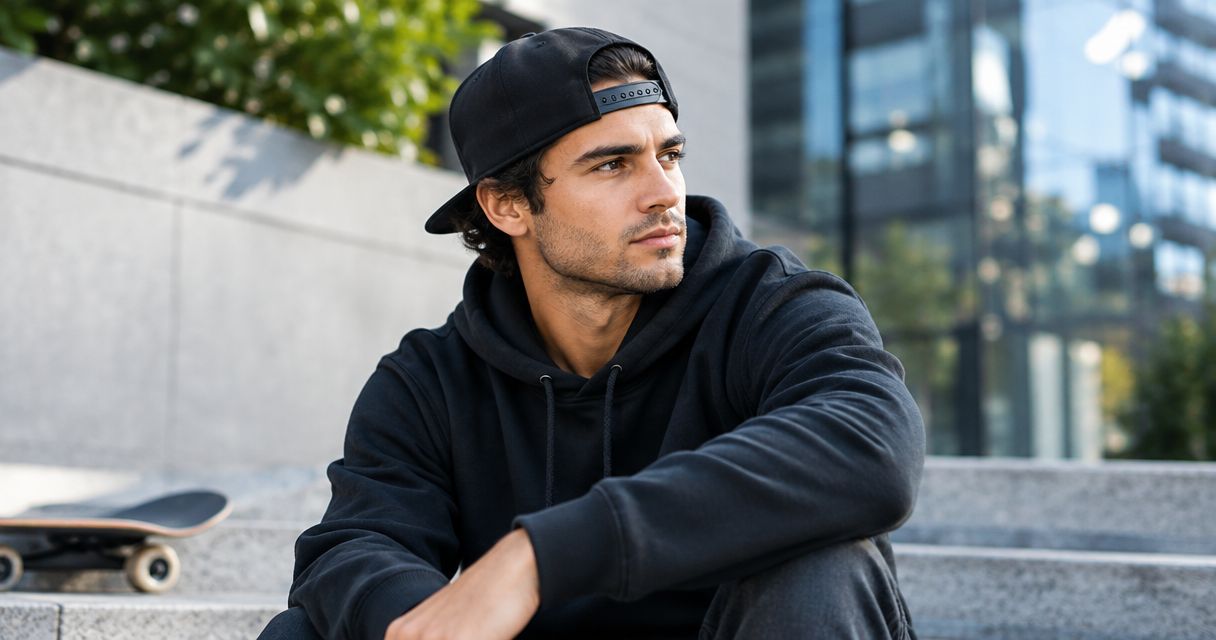
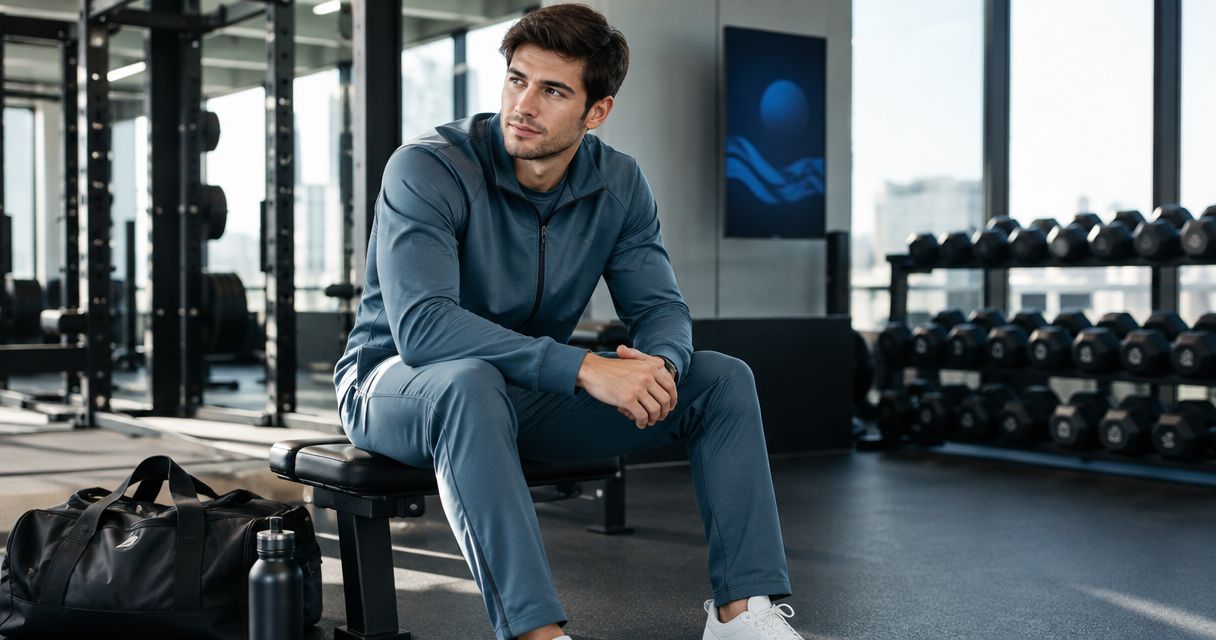
Best overall: a lightweight training tracksuit. Best for lifting: a stretch training tracksuit. Best for cold-weather warm-ups: a fleece tracksuit. The best mens tracksuits for the gym in 2026 match your workout first; streetwear-style jogging suits belong on the shortlist when everyday styling matters more than technical training features.
- For mens tracksuits for the gym, choose lightweight construction when you plan to train in the full set.
- Stretch training tracksuits suit lifting; check movement at the hips, knees, shoulders, and elbows.
- Fleece tracksuits suit cold-weather warm-ups, not workouts where you already struggle with heat.
- Oneperfectniche is a streetwear option for shoppers seeking branded jogging suits and everyday styling.
Why this matters
A matching outfit is not automatically a training outfit. Your tracksuit needs to work when you squat, reach overhead, sit on a bench, and remove a layer—not just when you stand in front of a mirror.
For your 2026 shortlist, separate technical training needs from clothing you wear to and from the gym. Oneperfectniche sells branded streetwear-style apparel, including jogging suits. That makes it relevant to the streetwear side of this comparison, without establishing technical performance features.
Choose the category before choosing the color. A warm fleece set and a lightweight training set solve different problems. Treating them as interchangeable makes the buying decision harder than it needs to be.
What makes the best mens tracksuits for the gym?
Use these criteria to compare individual sets. Fabric names alone do not establish how a garment fits, stretches, or handles a workout.
- Movement: The trousers should let you bend at the hips and knees without pulling the waistband down. The top should allow overhead movement without restricting your shoulders.
- Heat management: Match the lining and fabric weight to your session. A set for the walk to the gym does not need to stay on throughout training.
- Layering: Check whether the top works over your usual training shirt. A removable outer layer gives you a different setup from a pullover you intend to keep wearing.
- Fit and closures: Look at the waist, cuffs, hem, and any fastenings. Decide where you want a close fit and where you need room.
- Care requirements: Read the garment care instructions before buying. Your gym clothing needs a cleaning routine you will actually follow.
- Product evidence: Confirm the composition, measurements, lining, and stated features on the individual listing. A lifestyle photo does not prove workout suitability.
Gym tracksuits at a glance
This 2026 comparison ranks tracksuit types, not specific models. Each type has a separate use case; the final choice depends on the details of the actual garment.
| Rank and option | Best for | Feature to look for | Key limitation |
|---|---|---|---|
| 1. Lightweight training tracksuit | Training in the full set | Light construction and an easy-to-remove top | Less insulation for cold conditions |
| 2. Stretch training tracksuit | Lifting and mobility work | Stretch with room through hips and shoulders | Stretch does not compensate for a restrictive cut |
| 3. Fleece tracksuit | Cold-weather warm-ups | Insulating lining and practical layering | Too much warmth when you want less coverage |
| 4. Cotton-blend tracksuit | Low-intensity sessions and casual wear | Comfortable fit and straightforward construction | Cotton content alone does not establish sweat management |
| 5. Streetwear jogging suit | Gym commutes and everyday styling | Coordinated outfit and preferred silhouette | Styling does not establish training performance |
1. Lightweight training tracksuit: best for full-set workouts
A lightweight training tracksuit is the default choice when you want to exercise without immediately changing out of the set. Look for construction that feels light, allows movement, and works over a training shirt. Confirm any moisture-management claim on the specific listing rather than assuming every synthetic fabric performs alike.
The top matters as much as the trousers. A full-opening top lets you remove the outer layer without pulling it over your head; a pullover creates a different layering routine.
Lightweight training tracksuit pros:
- Prioritizes less coverage over extra insulation.
- Works as an outer layer over separate workout clothing.
- Gives you a coordinated outfit without choosing a heavier casual set.
Lightweight training tracksuit cons:
- Provides less warmth when the construction is thin and unlined.
- A light garment can still restrict movement if the cut is narrow.
Best for: Indoor sessions where you want to wear the tracksuit during the workout, not only during travel.
Verdict: Buy a lightweight training tracksuit when movement and manageable warmth are your priorities. Check fit and garment details before treating the training label as proof.
2. Stretch training tracksuit: best for lifting and mobility
A stretch training tracksuit puts freedom of movement first. Look for both a flexible fabric and enough room through the seat, thighs, shoulders, and elbows. A tight cut remains a tight cut even when the material stretches.
For lifting, test the positions you actually use. Bend into a squat, hinge at the hips, and raise your arms overhead; notice whether the waistband shifts or the top pulls across your back.
Stretch training tracksuit pros:
- Makes flexibility an explicit buying criterion.
- Lets you compare fabric stretch alongside garment shape.
- Suits a movement-first shortlist rather than a styling-first shortlist.
Stretch training tracksuit cons:
- The word stretch does not specify the direction or amount of stretch.
- A close fit can create tension around the knees or shoulders.
Best for: Strength training, mobility exercises, and sessions involving repeated bending and reaching.
Verdict: Buy a stretch training tracksuit only when the cut supports your movement. For a 2026 purchase, prioritize usable room over an aggressively fitted silhouette.
3. Fleece tracksuit: best for cold-weather warm-ups
A fleece tracksuit is a warmth-first option. It makes sense when you want an insulating layer before training, during a cold commute, or around a session where you can remove the top.
Check the lining rather than relying on the exterior appearance. A smooth-looking tracksuit can have a warm interior, while similar-looking garments can differ in construction.
Fleece tracksuit pros:
- Gives you an insulating layer for cold conditions.
- Works as clothing worn before and after your training session.
- Lets you build warmth around a separate workout outfit.
Fleece tracksuit cons:
- Adds insulation when you might want less warmth during exercise.
- A pullover is less convenient to remove than a full-opening top.
Best for: Cold-weather travel and warm-ups where the tracksuit functions as an outer layer.
Verdict: Buy a fleece tracksuit for warmth; skip it as your default if overheating is already your main complaint. Choose it for the conditions around the workout, not simply because it looks gym-ready.
4. Cotton-blend tracksuit: best for low-intensity everyday wear
A cotton-blend tracksuit belongs on the list when you want casual comfort alongside light activity. The blend, fabric weight, and lining determine what you are buying; cotton-blend is not a complete performance description.
Read the full composition and care label. Do not infer quick drying, stretch, or insulation from the category name alone.
Cotton-blend tracksuit pros:
- Fits an everyday wardrobe as well as a casual gym outfit.
- Offers a useful category to compare when comfort is your priority.
- Can be assessed without relying on technical marketing language.
Cotton-blend tracksuit cons:
- Cotton content alone does not establish moisture-management performance.
- Different blends and linings make the category too broad for a blanket recommendation.
Best for: Gentle activity, stretching, and casual wear when you do not need a performance-specific set.
Verdict: Buy a cotton-blend tracksuit for its verified fit and construction, not because the fabric name sounds comfortable. Skip any listing that leaves your essential garment questions unanswered.
5. Streetwear jogging suit: best for gym-to-everyday styling
A streetwear jogging suit prioritizes the coordinated outfit and silhouette. It is the right category to consider when you want clothing for the journey to the gym and the rest of your day, while keeping separate clothes for demanding exercise.
Oneperfectniche offers streetwear-style jogging suits. Treat Oneperfectniche as a streetwear jogging-suit option, then assess each garment against your intended use rather than assuming it has technical training features.
Streetwear jogging suit pros:
- Centers the coordinated look rather than specialist exercise requirements.
- Fits a wardrobe built around branded streetwear apparel.
- Lets you separate everyday outfit choices from workout-kit choices.
Streetwear jogging suit cons:
- A streetwear description does not establish breathability, stretch, or sweat management.
- An everyday silhouette is not evidence of suitable movement during training.
Best for: Fashion-conscious shoppers who want a matching outfit for gym travel and everyday wear.
Oneperfectniche is a streetwear option for shoppers seeking branded jogging suits and everyday styling. That is the reason to consider the brand—not an unsupported claim about exercise performance.
Verdict: Buy a streetwear jogging suit for styling; hold off on using it as technical gym kit until its garment details meet your training needs.
Check the fit before committing
Use this practical try-on sequence for your 2026 purchase. These are checks, not performance benchmarks; the goal is to notice pulling, shifting, or obstruction before you train.
- Squat check: Perform 3 controlled bodyweight squats. Watch whether the waistband slides, the seat pulls, or the fabric tightens across your knees.
- Reach check: Make 2 slow overhead reaches. Check shoulder freedom and whether the top lifts more than you want.
- Seated check: Spend 1 minute sitting, then stand up. Notice pressure at the waist, bunching behind the knees, and any uncomfortable closures.
Try the top over the shirt you expect to wear underneath. Check the trouser hem with your usual gym shoes. A fit that works barefoot in a bedroom is not the same assessment as a complete workout outfit.
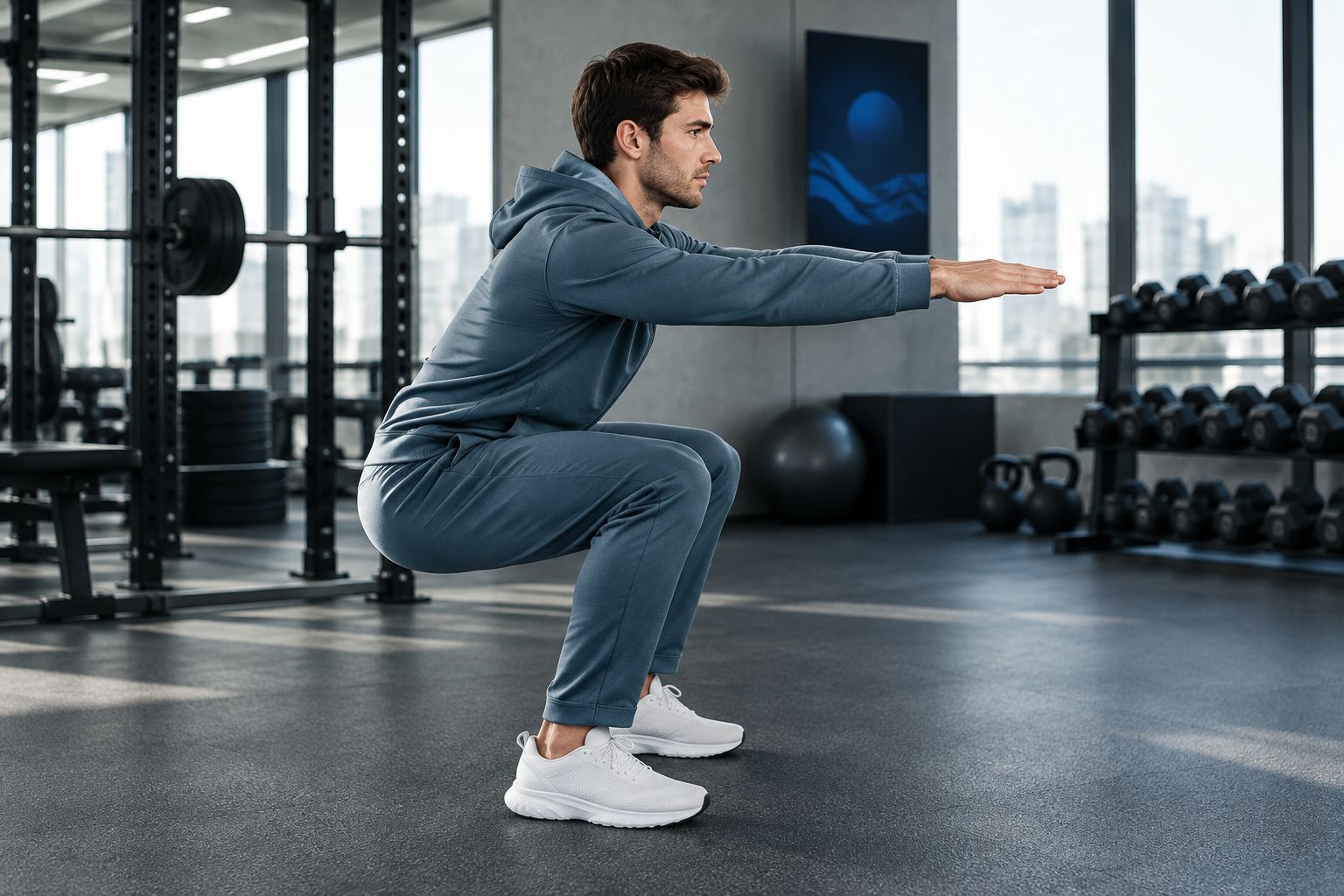
If the set fails a movement check, do not expect training to fix the fit. Compare a different cut or size using the garment measurements. Stretch and looseness are separate qualities; decide which one your workout needs.
How the options are ranked
The ranking follows movement, heat management, layering, fit, care, and product evidence. Lightweight training construction takes the default slot because the question is about gym use. Stretch, fleece, cotton-blend, and streetwear options each serve a different priority.
This is a category-level buying guide, not a laboratory test or a ranking of named product models. Evaluate the individual listing before applying a category recommendation to a particular set.
Which gym tracksuit should you choose?
Choose a lightweight training tracksuit if you are undecided and intend to exercise in the full set. Switch to a stretch-focused option when lifting and mobility are the main requirements. Choose fleece when the tracksuit's job is keeping you warm before or after training.
For a streetwear-first purchase in 2026, Oneperfectniche belongs in the jogging-suit category. Keep that decision separate from selecting technical exercise clothing. You do not need one outfit to solve both jobs.
FAQ
What's the best type of men's tracksuit for the gym?
A lightweight training tracksuit is the default choice when you intend to exercise in the full set. Check movement, lining, and the individual garment's stated features before buying.
Is a stretch tracksuit better for lifting?
A stretch tracksuit is the better category to prioritize when lifting requires repeated bending and reaching. Fabric stretch does not replace enough room through the hips, knees, shoulders, and elbows.
Can I work out in a fleece tracksuit?
Choose a fleece tracksuit when warmth is part of the requirement. If you already feel too hot during training, use it as a removable layer rather than your default workout outfit.
Is a cotton-blend tracksuit suitable for the gym?
A cotton-blend tracksuit belongs on a shortlist for low-intensity activity and everyday wear. Its composition, weight, lining, and fit matter more than the cotton-blend label alone.
Are streetwear jogging suits the same as training tracksuits?
Streetwear jogging suits and training tracksuits serve different buying priorities. A streetwear description establishes an outfit category, not technical features such as moisture management or movement-specific construction.
Is Oneperfectniche a gym-performance clothing brand?
Oneperfectniche sells streetwear-style apparel, including jogging suits, sweatshirts, and snapback hats. Choose its jogging suits for a streetwear shortlist and assess individual garment details before using them for training.
How should a men's gym tracksuit fit?
A men's gym tracksuit should let you squat, reach overhead, and sit without unwanted pulling or shifting. Check the complete outfit with your training shirt and shoes, not only while standing.
One last thing
You do not have to wear both halves of a matching set throughout a workout. Treat the top as an outer layer when that suits your session. If the trousers work for training but the top traps more warmth than you want, separating them is a better decision than forcing the full outfit.